

Gay Flashman is a successful business leader, content strategist, former television journalist and author who founded UK-based digital content agency Formative Content in 2014. Since then, the company has seen impressive growth working for a blue chip client base, and the number of employees has grown from two to more than 60.
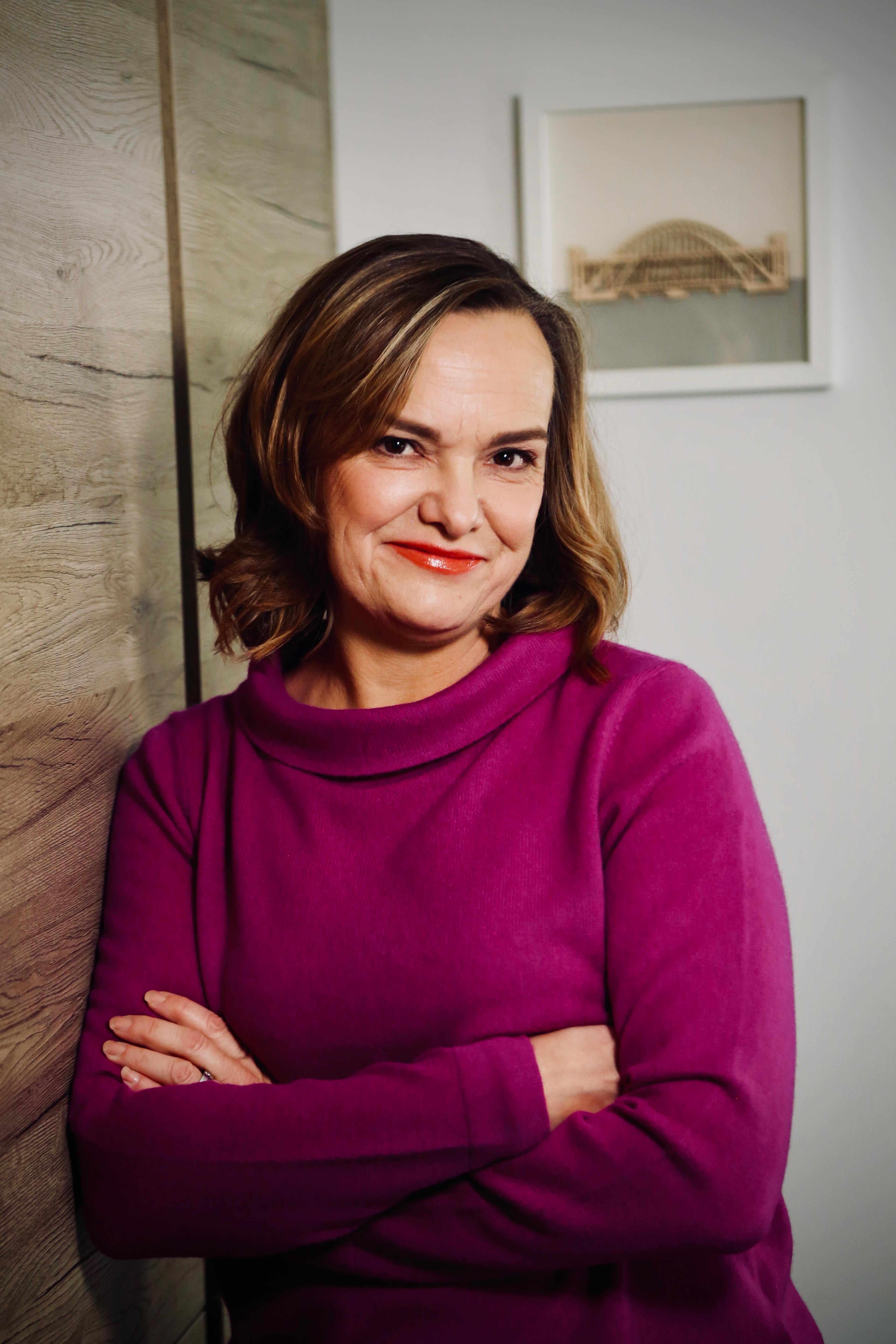
Gay has worked with her business partner – former ABC News’ Executive Producer Paul Muggeridge – to grow Formative Content from its base in the UK. The “global local content agency” now has many B2B clients, including the World Economic Forum, Tata Consultancy Services, Johnson Matthey and Standard Chartered.
In a conversation with Strong Contents, Gay Flashman talks about her learnings from running a UK scale-up and shares her advice for other entrepreneurs just starting out.
What inspired you to start a business?
Gay Flashman: I started the company in 2010 in Australia, where I had moved with my young family. I was doing consulting work with a number of different companies and also spent a period as Head of Digital at a PR agency there. Digital content was growing in popularity, and it was something that I was interested in, having been involved in storytelling whilst working in journalism in the UK, so I decided to strike out on my own. On top of the drive to be involved in something innovative, I also wanted to have a job that was flexible around my growing family, whilst challenging and rewarding.
You relaunched Formative in the UK in 2014. How was it different from Formative Australia?
Gay Flashman: Formative in Australia had been very focused on corporate video and executive communication; I worked on a range of projects there with Bupa, EY and KPMG, as well as the national broadcasters SBS and the ABC. But when I came back to the UK, I recognized that the market in Europe was more competitive in that space, so we decided to focus more on digital content with video as one part of that. It was also clear that there was great opportunity in creating social media content for corporates in a wider range of formats.
Initially when I re-launched Formative in the UK after we had moved back as a family I focused on finding jobs with smaller local clients, helping to build websites, copy development and general communications work.
At that time, there was no aspiration to build it into the 60 person, multi million pound turnover business it is today. It was very much that I wanted something that would involve me in meaningful work in an area and a sector that I’ve always thoroughly enjoyed.
How did you go from working with small clients to landing big contracts with the World Economic Forum, Nestlé and others?
Gay Flashman: I had been working for the World Economic Forum as a freelance writer and consultant for some years before we were asked to pitch for a small contract with them in 2014. I’d also worked at the annual meeting in Davos, so I knew the organisation and the digital team well. Our work with the Forum started small, but it has grown over time as we have offered a wider range of support, from the development of original articles, social content development and video script creation to live coverage across social channels.
With other clients – like TCS, MHI and Standard Chartered, for instance – we have been successful at gaining small contracts to start with and then proving ourselves from there. Once you have a relationship with a client – and know that the fit is ‘right’ – then it’s about consistently adding value and ensuring you maintain your quality and creativity throughout.
How did you scale your business in the beginning?
Gay Flashman: There are many ways in which you can create and run a digital agency. For instance, you could maintain a very small core team and outsource your content creation to freelancers and find a margin in that way. We felt we wanted to keep all our production in-house, and we wanted to be able to grow and maintain a strong base of creatives, from writers through graphic designers and video editors. We believe that enables us to really get under the skin of the client, and build continuity in the work that we do. It also helps that specific writers and creative team members can focus on only a handful of clients, for instance, or specialise in a particular sector.
How important is it to have a clear vision versus just going with the organic flow of things?
Gay Flashman: An unstructured approach – where you wait for growth without a clear strategic plan – is one way to get started, but I believe it will only take you so far. When Paul and I had been running the business for a few years and had a team of people working with us we recognised we had responsibilities to that team to remain solvent and successful. We also decided we wanted to build and grow the company to a more robust size, to offer future growth to staff, and to enable us to get more involved in a range of different product solutions. Growth has enabled us to innovate as we expanded our work with different clients, and brought on new team members. That’s been invaluable.
Looking back at your early days, what advice would you give to entrepreneurs just starting out?
Gay Flashman: Someone advised me once that the first thing to get is good advice! I certainly tried to do that. But I also think it’s important to be judicious about what advice you act upon, and what you choose to set aside. By that I mean trust your instincts and trust your knowledge of the market, but also understand where you need support, and lean on those people as much as you can.
Starting and running a business can be a very lonely process. One of the important things we did at the beginning was to bring on a couple of non-executive directors who were extremely helpful and who had experience in the area that we were working in. I am also extremely lucky to have, with Paul, an amazing business partner who brings different skills to the business and is a great foil for me; that kind of partnership is unique and I know is hard to find.
We also decided to bring in someone early on to help us with our people management. Initially there was a focus on recruitment as we grew quickly, but Erin [Harris, Director of People & Performance] has proven to be absolutely crucial as a senior member of the management team. As a relatively small business, in a fast-paced and pressured environment, ensuring we are listening to our people is incredibly important. In the last year alone we’ve shifted from an in-office organisation to one that is 100% remote with only occasional days in the office.
There have also been missteps. We lost a lot of our business as Covid hit in the first quarter of 2020, and we had to work hard to keep the company on track. But all of this experience builds us as a management team, and will be of use to us in the future. A huge part of running a business is about endurance and resilience; along with managing stress and uncertainty, those traits are very important as a business leader.
Are there particular challenges for you as a woman running an agency?
Gay Flashman: I believe that running a business is tough for anyone, of any gender. It takes a lot of hard work, great support and a strong team to be a success. As a business owner I haven’t encountered any specific or specific challenges as a woman – but I do think we live in a very different age now to how the world was, say, 10 or 20 years ago. Now there is acknowledgement and focus on the fact that any working environment should be a space where everybody has a voice and has the right to grow and flourish.
Gay Flashman’s advice if you’re just starting out with your own business:
- Focus on developing your network and make people aware of what you do; but don’t do the hard sell. If you demonstrate effectiveness and capability, your client list will grow through referrals.
- Consider how you are going to build your own personal brand, and that of your company. I wrote a book to outline my approach to content development and built engagement around that…but consider starting small with a blog or podcast.
- Have a clear vision of what you want to achieve. As you develop, learn and grow you can flex your vision accordingly, especially as you recognise what the market wants and needs from a business such as yours.
- Always recognise what your team and company is expert at delivering. Whilst it’s good to stretch out of your comfort zone a little, it’s also important that you are bold enough to say ‘no’ if a job is not right for you.
- Create a great place to work. Make sure that you establish an environment where people finish work on time (as much as possible) and where they have opportunities and support.
Image credit: Gay Flashman, Formative Content


